
Closed Composting System
The CCS is a patented system in which untreated organic materials are mixed in a specific ratio and placed into a plastic bag. This method protects the composting process from external weather influences such as rain and wind, and entirely eliminates odors. The system is based on maintaining the correct carbon-to-nitrogen ratio, and is monitored through temperature control combined with forced aeration and the targeted application of beneficial bacteria.
Compared to traditional composting methods, CCS offers many advantages:
- Little to no odor
- No spatial emissions
- Up to 65% cost savings
- It saves both time and labor as it requires no additional handling
- No need for significant infrastructure investment
- As a fully controlled process, composting is 2 to 3 times faster
- The quality of the final compost is consistent and can be adjusted thanks to controlled conditions
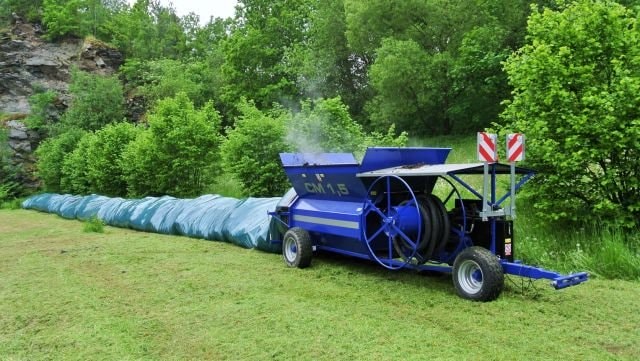
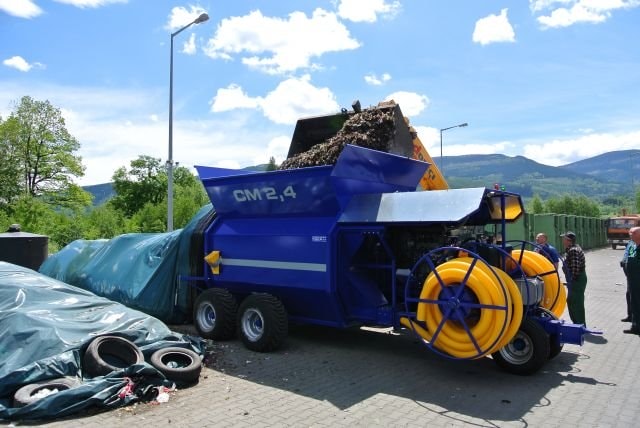
CCS and Odor Emissions
Odor is one of the key environmental concerns when selecting a location for composting organic waste. In traditional systems, this issue has been difficult to address due to the open nature of the process.
The Closed Composting System (CCS) is characterized by little to no odor. The controlled airflow inside the composting bag creates optimal conditions for aerobic activity, allowing the composting process to take place without producing unpleasant smells.
The entire process takes place in a sealed environment, meaning the composted material is not exposed to external conditions. The material remains undisturbed throughout the composting period, which contributes to odor prevention. This approach effectively eliminates the primary causes of odor generation.
CCS and flexibility
The Closed Composting System (CCS) offers optimal flexibility – it is mobile and can be installed virtually anywhere. This eliminates the need to transport materials over long distances. The space requirements for setting up the CCS are minimal. For approximately 200 tons of material, the following setup is sufficient:
- A solid surface area of 70 × 8 meters
- Access to running water
- Electrical connection
When renting the system from a service provider, the investment costs are minimal (excluding the optional investment in a concrete surface).
CCS Process
- Material Size Reduction:
The organic material to be composted must be shredded into particles no larger than 10–15 cm, depending on the type of material. - Material Mixing:
A mixture of various materials is created with an ideal carbon-to-nitrogen (C/N) ratio. - Water Addition:
Depending on the mixture, 50–60% moisture is added to ensure proper decomposition. - Bag Filling:
The compostable mixture is filled into an LDPE (low-density polyethylene) bag using a composting machine. A fan is then connected to provide optimal oxygen supply throughout the process. - Process Monitoring:
During weeks 12 to 15, temperature must be regularly monitored to allow for adjustments of the composting process if necessary. - Screening:
After composting, the material is screened. Oversized fractions are reprocessed through the system. - End Product:
The result is a homogeneous compost product suitable for various applications.
CCS in Zábřeh
Technological advantages of CCS
- Controlled Environment
CCS is a closed “container”- Not influenced by weather, rain, wind (dispersion)
- Controlled emissions
- Controlled odor emissions
- Environmentally Friendly
- A process that is gentle on the environment
- Manageable Process
- Temperature control
- Forced oxygen supply
- Water addition
- Inoculant application
- Space-Efficient
- No need for space or time to move products around
- No need for confined spaces
- Requires only a simple setup (a concrete base, water, electricity)
- Simple Technology
- Proven bagging technology
- Easy management and control
Economic advantages of CSS
- Low Investment
- Investment in a concrete base if not already available
- Aeration system
- Thermometer
- Short Process Time
- 12 to 15 weeks from the start of the process to the final product
- No Need for Interim Material Handling
- Problematic products in traditional composting
- Odorous products can be easily processed
- Flexible System
- Not tied to a specific location
- Rentable when needed
- Various Applications
- Expected changes in legislation
- “Labeled” compost due to constant, precise mixing ratio
- Evaporation
- Production of dense and liquid fertilizer
- “Purification” of soil
