Compost Bagger CM 1.5

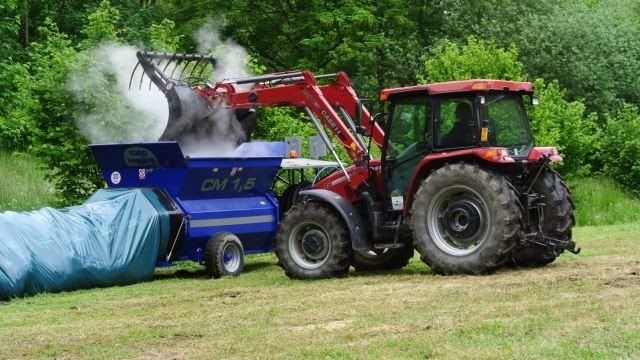
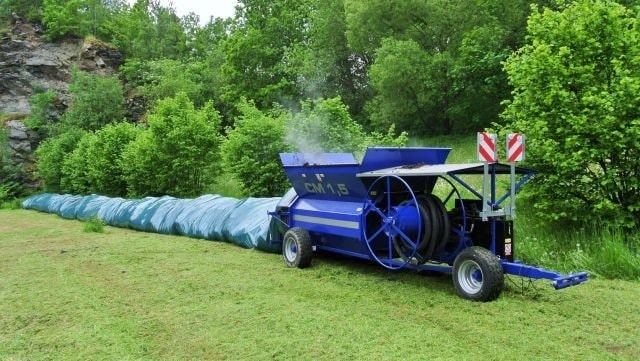
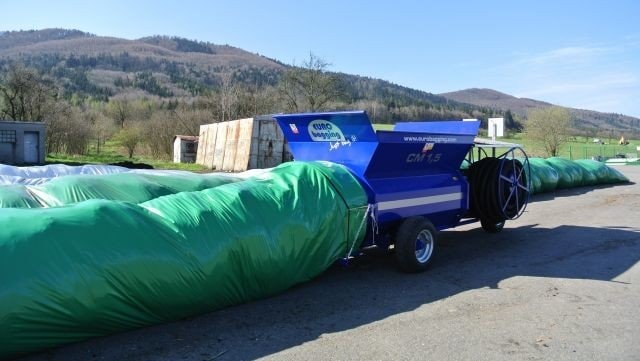
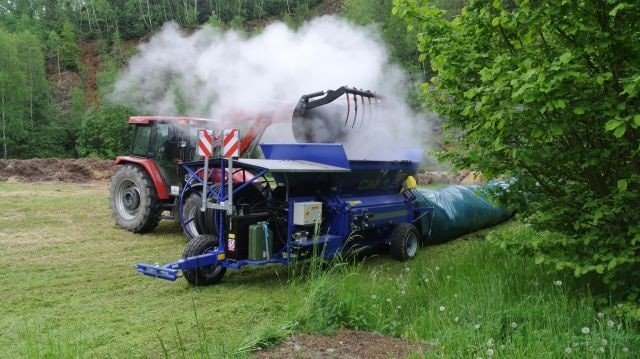
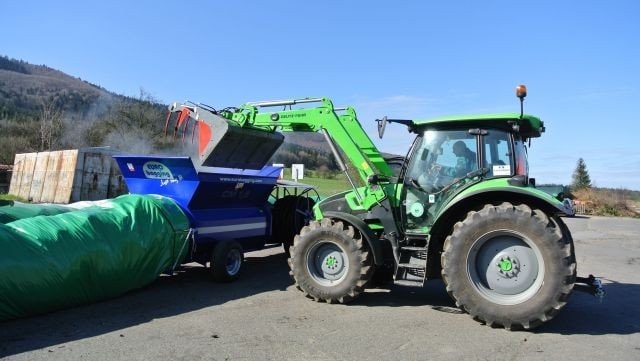
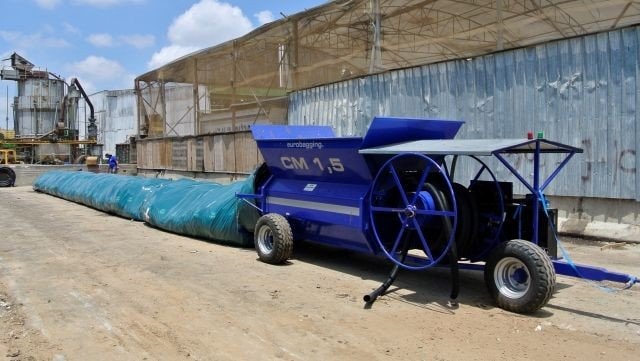
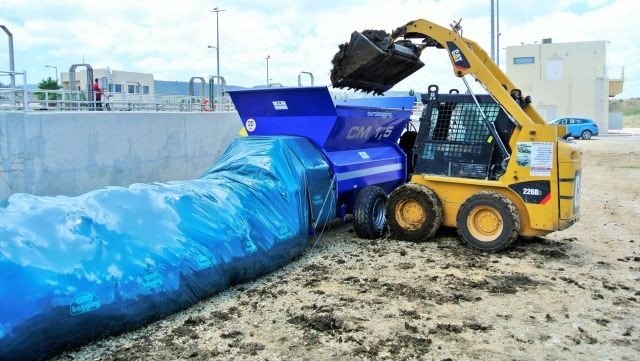
This compost bagger is designed for small composting facilities and municipalities processing biodegradable waste (biowaste) or biodegradable municipal waste (BMW). The CM 1.5 is manufactured as a tractor-drawn machine. It does not require any external power source as it is equipped with its own diesel engine.
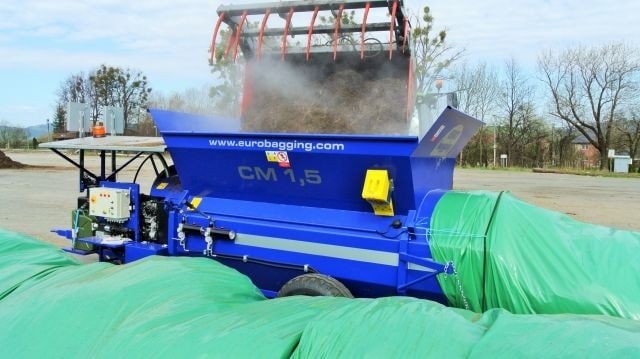
Features of the CM 1.5 Compost Bagging Machine

A single operator is sufficient to operate this compost bagger. The operator starts the work cycle with a remote control, which allows them to multitask. The bagger can be controlled, for example, from the cabin of a front loader that loads the material into the machine's working space. The CM 1.5 is equipped with hydraulic axle braking to properly compress the material into the bag. A perforated hose introduced into the bagging area later supplies the bag with fresh air, which is a crucial element for the process.


Technical Data Sheet CM 1,5


Technical Specifications of the CM 1.5 Compost Bagging Machine

  • Length/ Width/ Height: 5425 mm/ 2170 mm/ 2180 mm
  • Machine Weight: 2450 kg
  • Transport Speed: 20 km/h
  • Bag Diameter: 1.5 m
  • Engine: Yanmar - Diesel 14.5 kW
  • Working Space Volume: 2.7 m³
  • Cycle Time: 120-150 seconds


Video


Customer Testimonials

  • Lauritz Haar

    Stavanger, Norway
    Switch from round bales to silage in bags

    I chose EURO BAGGING technology because of its low investment cost for storage and because it ensures a consistent fermentation process — unlike round bales, where fermentation differs in every single bale. For bag silaging, you don’t need as much machinery as for round bales — just a silage bagger and 2–3 silage wagons, which also have a lower ground pressure. At the same time, I save time because once the last wagon is processed, I seal the bag with a zip, and the fermentation process is already underway — and I’m done. Laboratory test results confirmed that it is a very stable product with minimal losses. I’m convinced this technology has a strong future in the feed storage segment.

  • Florian Kern

    Schönberg, Germany

    Switch from open storage to silage bags

    Since 2009, we have been using silage bag storage technology. Before that, we pressed large square bales, and grass and corn silage were stored on open ground, which led to significant losses. We started looking for a new storage method to minimize losses, so we bought a used silage bagger of Italian origin. However, we weren't convinced by the design of that machine — its concept and transport were complicated. We needed to move the machine several times a day from one farm to another. In our region, there are many small farms, and we often ensile only small amounts of feed. Typically, we need to move and set up the machine 3–4 times a day.

    The EURO BAGGING EB 310 LG bagger offers a great solution — it doesn't need to be disconnected from the tractor. It is easily set into working position just by reversing. The EB 310 LG has high capacity and achieves a high compaction rate in the bag.

  • NADEC AGRICULTURE

    Saudi Arabia
    Corn silage storage

    We, NADEC AGRICULTURE, are one of the largest farms in Saudi Arabia, storing over 80,000 tons of silage and supplying it to our dairy farms. This storage system appears to be the best solution compared to large silage pits. Bag storage requires much lower investment costs and offers significantly greater flexibility.

    The sealed bags prevent oxygen infiltration. If the bags are properly filled, we can store silage for at least two years with dry matter (DM) losses of less than 8%, which is significantly lower than with other technologies.

    EURO BAGGING is the right partner for us. Not only are they specialists in the field of bagging, but they also provide excellent service with high-quality machines. I would like to highlight the openness and entrepreneurial spirit of Lukáš Jurek and strongly recommend EURO BAGGING to all potential customers.

Interested in our machine or have a question?

Do you have any experience with a similar machine?